Teletherapy Best Practices for Speech-Language Pathologists
What actually separates a productive telepractice session from a frustrating one, from room setup and materials prep to keeping a six-year-old engaged for a full 30 minutes.
By The Blink Session Team · Updated August 17, 2026
Most speech-language pathologists who struggle with telepractice are not struggling with technology. They are running an in-person session over a video connection and finding that it does not translate. The clinicians who thrive remotely have usually rebuilt the session itself.
Here is what tends to matter, roughly in order of impact.
Fix the audio before you fix anything else
Video quality is what people notice and audio quality is what determines whether therapy works. For articulation work in particular, a laptop's built-in microphone flattens exactly the acoustic detail you need to hear.
Wear a headset with a boom microphone, and ask families to do the same where possible. If a client cannot use a headset, ask them to work in a room with soft furnishings rather than a kitchen with hard surfaces. Echo is not a minor annoyance in speech therapy; it actively hides the distinctions you are listening for.
Prefer a wired connection for yourself. You cannot control the client's bandwidth, so remove your own end as a variable.
Prepare materials before the session, not during it
In person, a moment spent reaching for a card deck is invisible. On a video call, the same pause reads as dead air, and with a young client you lose attention you may not get back.
Have everything you plan to use open and ready before the client joins. Plan more activities than you expect to need, since remote sessions burn through material faster than in-person ones. Keep a reinforcer available that you can deploy in a couple of seconds.
Give the client something to do, not something to watch
This is the single largest difference between telepractice that works and telepractice that does not.
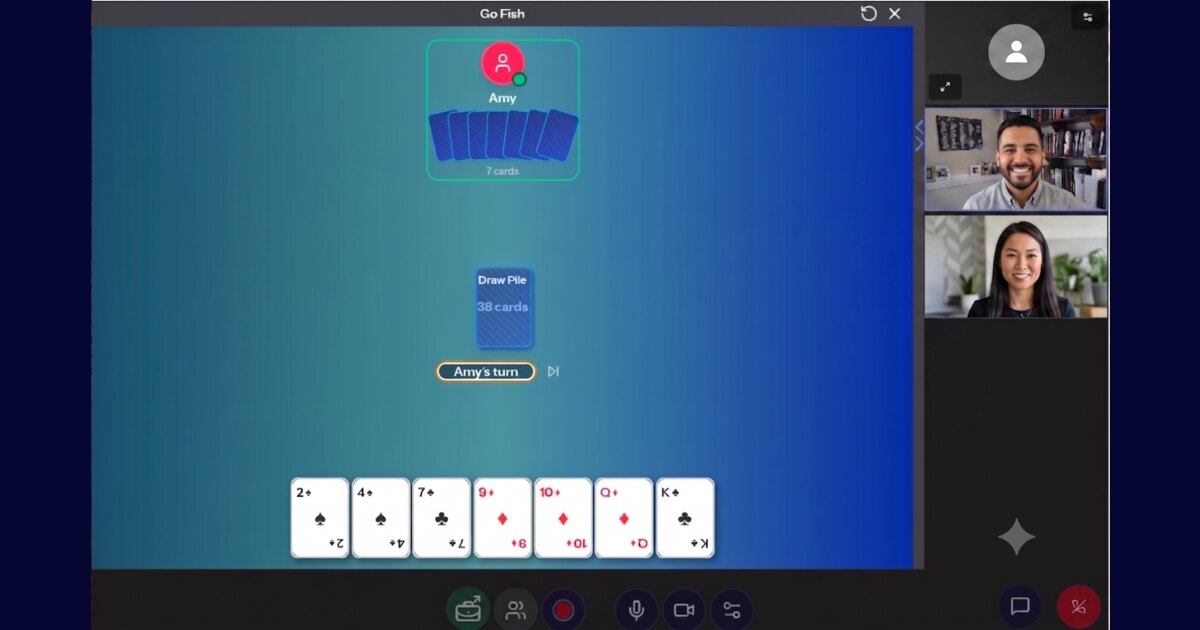
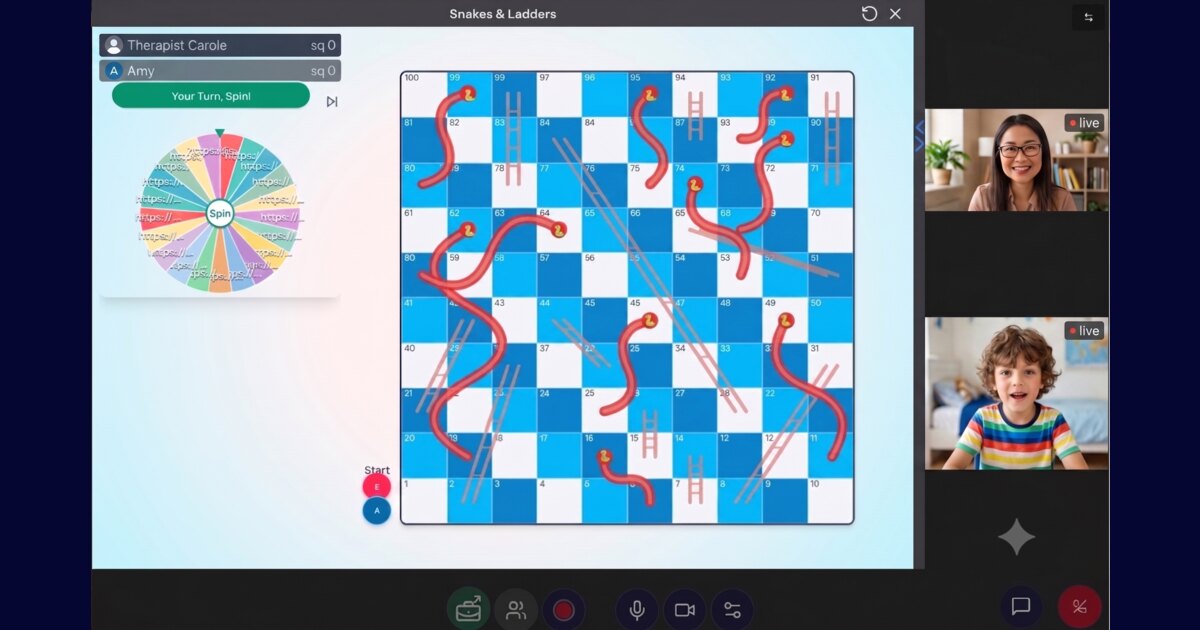
A client who is watching you manipulate materials is a passenger, and children disengage from being passengers quickly. A client who is dragging, clicking, sorting, and drawing is participating. Hand over control of the activity as a default rather than as an occasional treat.
The added benefit is diagnostic: when a client interacts with materials directly, you see their process, their hesitations, and their self-corrections rather than only their final answer.
Recruit the caregiver deliberately
Telepractice with a pediatric caseload has a third participant whether you plan for it or not. Decide what role you want them in and say so explicitly.
For younger children, an "e-helper" seated beside the client to manage the device and redirect attention is often the difference between a productive session and a lost one. For carryover goals, the caregiver's presence is an advantage you do not get in a clinic: you can coach them through the actual routine, in the actual home, where the target behaviour needs to happen.
Be specific. "Please sit next to her and help her stay at the table" gets you what you need. "Feel free to help" does not.
Shorten your activity blocks
Sustained attention to a screen is harder than sustained attention to a person across a table. Plan shorter activity blocks than you would in the clinic and switch more often. Movement breaks are not lost time; they buy back the attention that makes the next block productive.
Collect data during the session
The temptation is to write everything up afterwards. Resist it. Trial-by-trial data taken during the session is more accurate than data reconstructed from memory twenty minutes later, and documentation completed in the session window is documentation you are not doing at nine that evening.
Have a plan for when the connection fails
It will fail eventually, and how you handle it shapes whether the family trusts the format. Agree in advance on what happens: who calls whom, whether you switch to phone, and what the make-up policy is. Sharing that plan at intake converts a technical failure from an emergency into an inconvenience.
Screen for candidacy honestly
Telepractice is a valid service delivery model, recognised as such by ASHA, and the research comparing it with in-person speech-language therapy has generally found comparable outcomes for appropriate candidates. That last phrase carries real weight.
Attention, hearing, vision, behavioural needs, and available caregiver support all bear on whether a specific client is a good remote candidate. Being willing to say that a particular client needs in-person services, or a hybrid model, is part of practising well rather than an admission that the format failed.